Transfer Conveyor

Transfer Conveyor

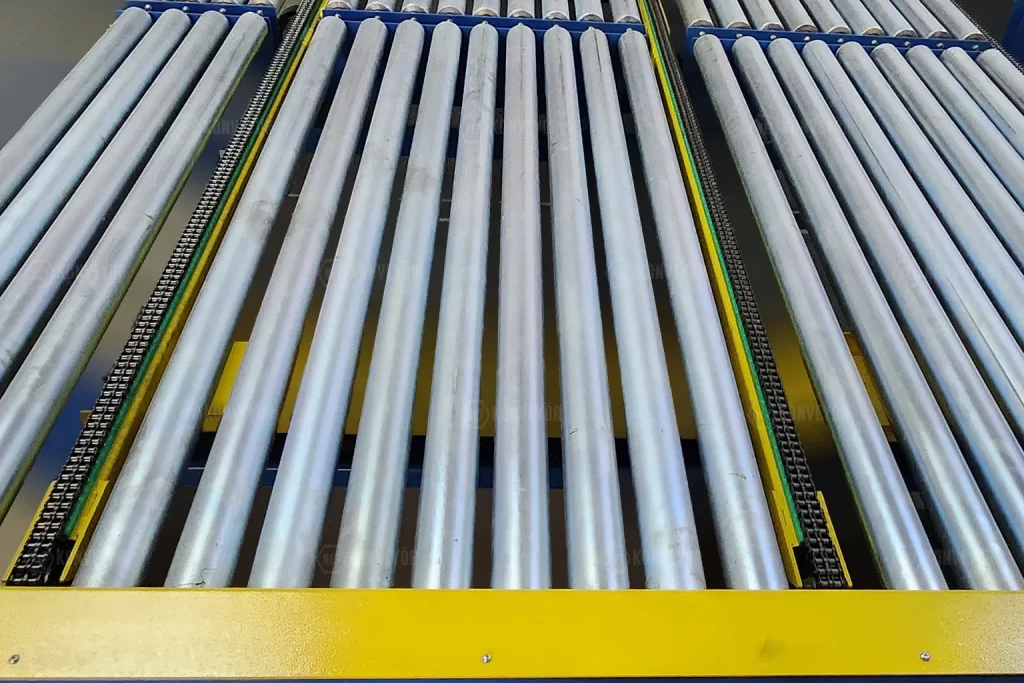
Transfer conveyors are specialized conveying systems designed to ensure the continuous, fast, and controlled transfer of products from one conveyor line to another within production systems. They are commonly used at line ends, cross-line transitions, and direction change points to maintain a smooth and organized production flow.

The direction change and transfer operations can be achieved using the following configurations:

  • Chain Transfer Conveyors
  • Roller Transfer Conveyors
  • PVC Belt Transfer Conveyors
  • PU Belt Transfer Conveyors
  • Modular Belt Transfer Conveyors
  • V-Belt Driven Transfer Conveyors
  • O-Ring Driven Transfer Conveyors

Remember! There is no single type of conveyor for every application; each production process requires its own tailored solution.

GET A QUOTE NOW

TRANSFER CONVEYORS

Transfer conveyors are systems used to transfer products between the same or different conveyor lines, typically for 90° direction changes. These systems can be designed as chain-driven, roller-based, or belt conveyors depending on the product characteristics. They eliminate bottlenecks between lines and ensure a smooth, continuous production flow.

Transfer Conveyor Features (1) 90° direction change capability, (2) Driven system with adjustable speed, (3) Pop-up lifting and transfer mechanism, (4) Chain, belt, V-belt, O-ring driven, and roller options, (5) Design suitable for different product types, (6) Continuous and controlled product flow, (7) Compact and flexible line integration

Motor Power

0,12 – 5 kW

Load Capacity

0 – 1000 kg

Conveyor Speed

1 – 40 m/min

Applications

Transfer conveyors play an important role in many industries where product transfer and routing between production lines are required. They offer a wide range of applications, from heavy industries such as automotive, white goods, machinery, and metal processing to sensitive production areas such as food, pharmaceuticals, and textiles. In addition, they are effectively used in processes that require fast and continuous flow, including logistics, warehousing and distribution centers, e-commerce operations, airport baggage handling systems, and cargo transportation. They are also preferred in various industries such as recycling plants, agricultural product processing, flour and feed mills, sugar and salt production facilities, as well as plastics, paper, furniture, and glass manufacturing.

GALLERY

DETAILED INFORMATION ABOUT TRANSFER CONVEYORS

  • The product moves along the main conveyor
  • At the transfer point, the pop-up (lifting) mechanism is activated
  • The product is lifted by a pneumatic or motor-driven system
  • It is redirected and transferred to another conveyor line
  • Ensures continuous flow between conveyor lines
  • Prevents bottlenecks and product accumulation
  • Controls product direction changes accurately
  • Provides safe handling for sensitive and fragile products
  • Improves overall production line efficiency
  • Offers long service life with minimal maintenance
  • Easily integrates with automation systems
  • Ensures compatibility between different conveyors